
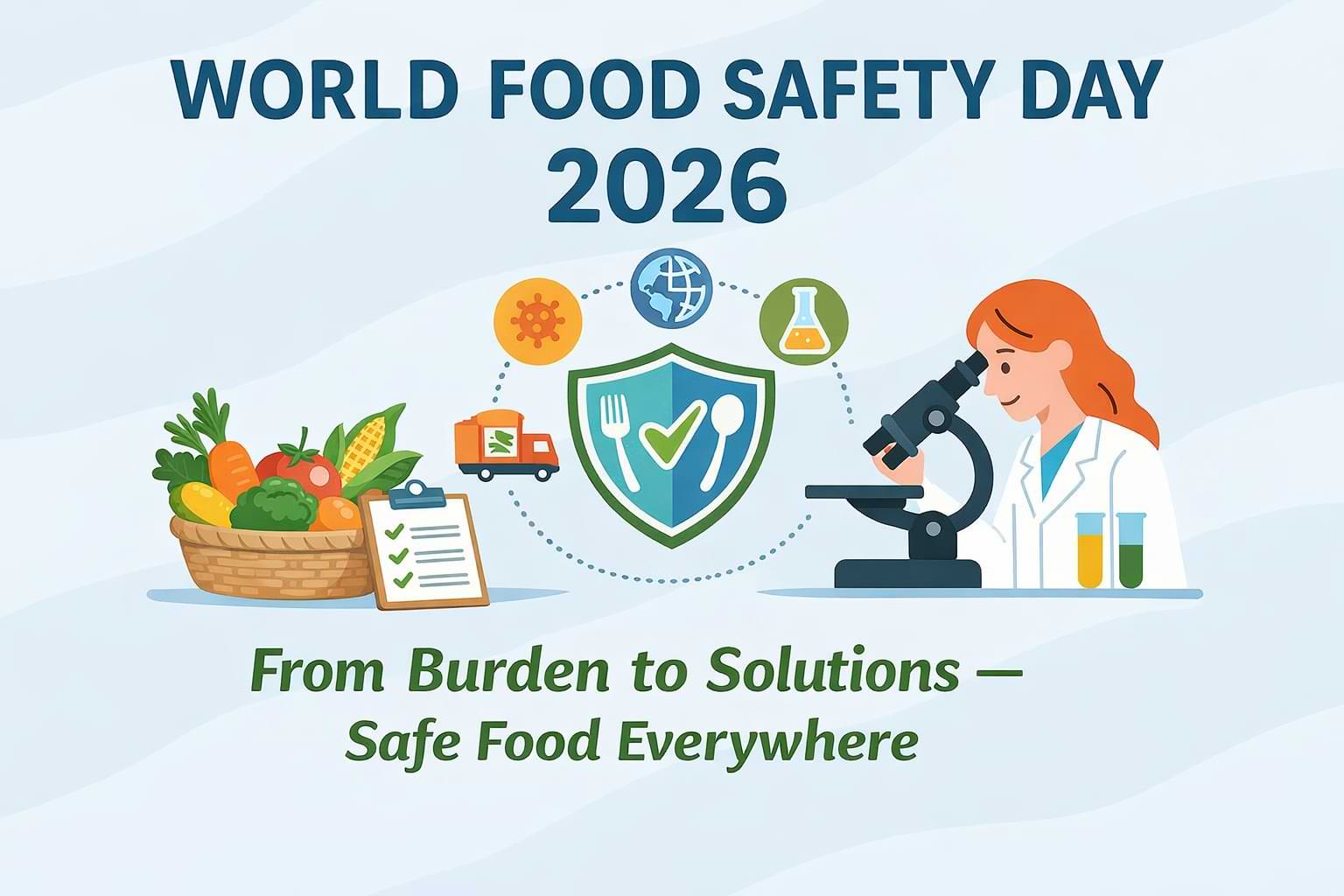
World Food Safety Day (WFSD) was established by the United Nations General Assembly in 2018, with active support from the World Health Organization (WHO) and the Food and Agriculture Organization (FAO) of the UN. It emphasizes the collective responsibility of governments, food producers, and consumers to ensure safe food practices.
It is observed annually on June 7, highlighting the importance of safe food practices to prevent foodborne diseases and ensure public health. This global observance calls on individuals, businesses, and governments to take action based on scientific principles for better food safety.
🌍 2026 Theme: “From Burden to Solutions – Safe Food Everywhere.”
The 2026 theme highlights the urgent need to move beyond identifying food safety challenges toward implementing practical, scalable solutions. It focuses on reducing the global burden of foodborne diseases by improving infrastructure, strengthening regulations, and ensuring access to safe food for all.
From farms to dining tables, the emphasis is on collaboration between governments, industries, and consumers to create a safer and more sustainable food system worldwide.
Quote:
“Safe food everywhere is not a privilege—it’s a shared responsibility.” – FAO / WHO
🌍 Why World Food Safety Day Matters
-
600 million people fall ill from unsafe food each year.
-
420,000 deaths are caused by contaminated food annually.
-
Children under 5 carry 40% of the foodborne disease burden.
Unsafe food impacts health, trade, and economic progress, especially in low- and middle-income countries.
Also Read: Important Days in June
👨🔬 How Science Supports Food Safety
🔹 Microbiology – Detects harmful bacteria, viruses, and pathogens.
🔹 Food chemistry – Identifies contaminants, additives, and toxins.
🔹 Data analytics – Tracks outbreaks and patterns of food-related illnesses.
🔹 Genomic sequencing – Traces foodborne diseases faster and more accurately.
🔹 AI & IoT – Enhances food supply chain monitoring and real-time risk alerts.
🧠 Trivia: Did You Know?
-
The WHO’s “Five Keys to Safer Food” are used in over 100 countries.
-
The first World Food Safety Day was held in 2019.
-
Contaminated food costs the world economy over $100 billion per year.
-
The FAO and WHO jointly host global events on this day.
🙌 How You Can Participate
Individuals:
-
Practice food hygiene: Wash hands, separate raw and cooked foods, refrigerate promptly.
-
Share safety tips online using #WorldFoodSafetyDay.
-
Read food labels and expiry dates carefully.
Schools and Institutions:
-
Host seminars on food microbiology and kitchen safety.
-
Organize science fair projects around food safety topics.
-
Conduct cooking competitions emphasizing hygiene.
Businesses:
-
Reassess food handling SOPs (Standard Operating Procedures).
-
Provide team training on scientific food safety practices.
-
Audit supply chains using digital traceability tools.
✨ Quotes to Share
“Food safety is everyone’s business.” – WHO
“Science makes our food not just better—but safer.”
“No innovation matters if our food isn’t safe.”
“Behind every safe meal is science in action.”
“Healthy food starts with safe food.”
Also Read: Food Safety Day Quotes
🧾 FAQs
Q1: What is the theme of World Food Safety Day 2026?
A: “From Burden to Solutions – Safe Food Everywhere.”
Q2: Who launched World Food Safety Day?
A: It was established by the UN General Assembly with support from WHO and FAO.
Q3: Why is it celebrated on June 7?
A: To globally raise awareness and promote actions that help prevent foodborne risks.
Q4: How does food safety affect the economy?
A: Foodborne illnesses cause significant economic loss, impacting productivity and healthcare.
✅ Final Thoughts
It invites us to recognize the critical role of science in safeguarding food. From smart farming to pathogen testing, science ensures that what we eat is not only nutritious but also safe.
Let’s honor this day by committing to science-based food safety in every kitchen, restaurant, and food supply chain.
“Safe food today ensures a healthy tomorrow—and science makes that possible.”