
UTC-7 Standard / UTC-6 Daylight
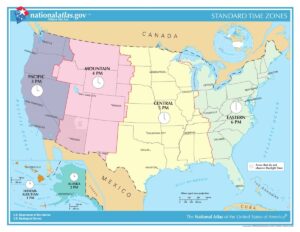
🏔️ Mountain Time (MT) – Overview
Mountain Standard Time (MST) is a key North American time zone positioned between Central and Pacific Time. It operates at UTC−7 during standard time (MST) and shifts to UTC−6 during daylight saving time (MDT).
The term Mountain Time (MT) is commonly used to refer to both MST and MDT.
📍 Key Highlights
- The second westernmost time zone in the United States and Canada
- Covers parts of 13 U.S. states and several Canadian provinces
- Includes cities like Denver, Phoenix, and Salt Lake City
- The least populated time zone in the United States
🌄 Why Mountain Time Matters
Mountain Time plays a vital role in connecting central and western North America. It is crucial for industries like energy, tourism, and transportation, especially across regions like Colorado, Utah, and Arizona.
MST is observed from the first Sunday of November to the second Sunday of March.
During the rest of the year, regions that follow daylight saving time switch to MDT (UTC−6).
However, some regions such as Arizona (except the Navajo Nation) and parts of British Columbia, observe MST all year and do not follow DST.
Geographically, Mountain Time lies between Central Time (CT) and Pacific Time (PT).
- 2 hours behind Eastern Time (ET)
- 1 hour behind Central Time (CT)
- 1 hour ahead Pacific Time (PT)
🌍 Where MST is Observed
United States: Colorado, Utah, Wyoming, Montana, New Mexico, and parts of Idaho, Texas, Oregon, and others.
Canada: Alberta, Northwest Territories, parts of British Columbia and Nunavut.
Mexico: States like Chihuahua, Sinaloa, and Sonora (year-round MST).
❓ Frequently Asked Questions
1. What does the MST abbreviation stand for and what is its UTC offset?
MST stands for Mountain Standard Time. It is UTC−7, and becomes MDT (UTC−6) during daylight saving time.
2. Which major cities use Mountain Time?
Major cities include Denver, Phoenix, Salt Lake City, and Albuquerque.
3. Does Mountain Time observe Daylight Saving Time?
Most regions do, but places like Arizona do not observe DST and remain on MST all year.
4. How does MST compare to other US time zones?
MST is 2 hours behind ET, 1 hour behind CT, and 1 hour ahead of PT.
5. Is Mountain Time the same as MST?
Not always. Mountain Time (MT) includes both MST (standard time) and MDT (daylight time).
6. Why is there a 1-hour difference between Denver and Phoenix sometimes?
Denver and Phoenix are the same time in winter (both MST). However, in summer, Denver moves to MDT (UTC-6) while Phoenix stays on MST (UTC-7), making Denver 1 hour ahead.